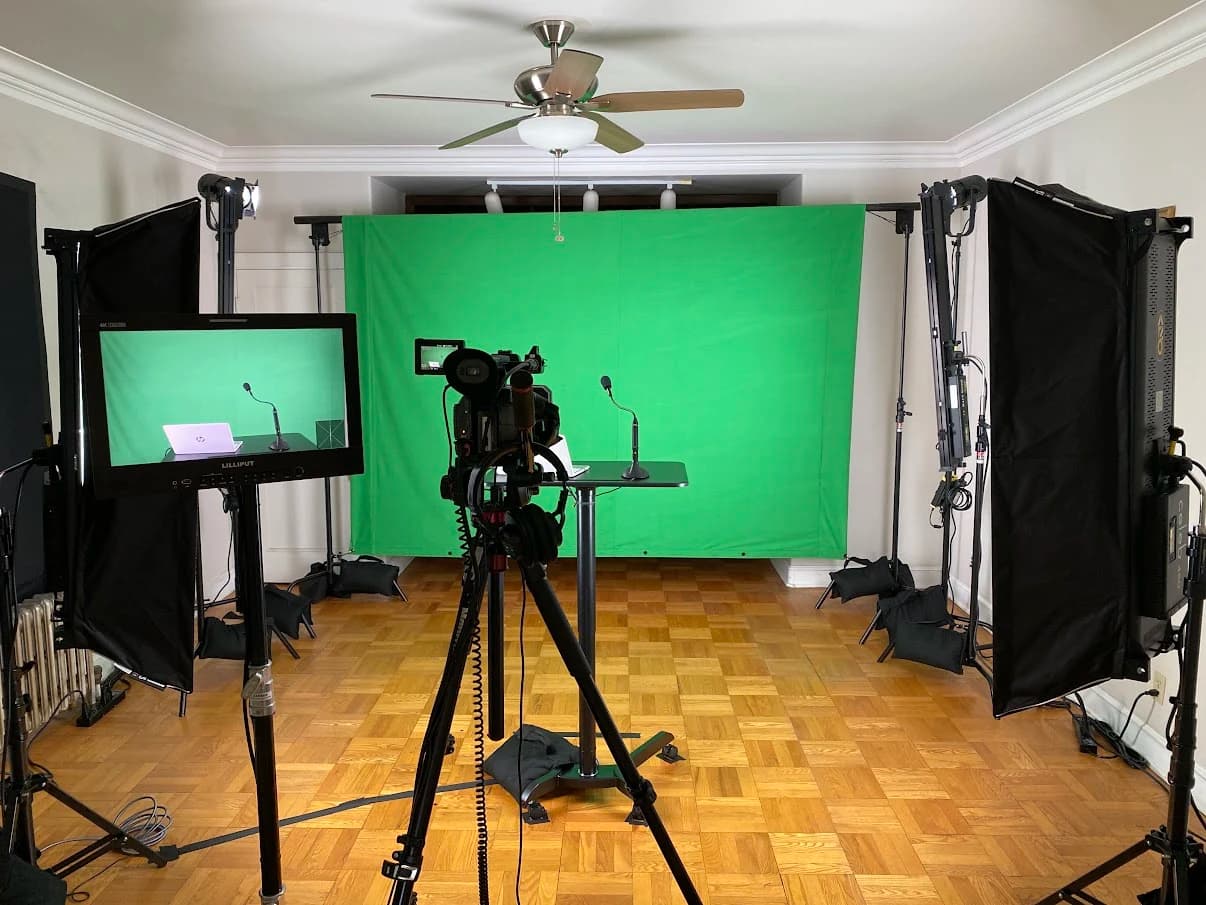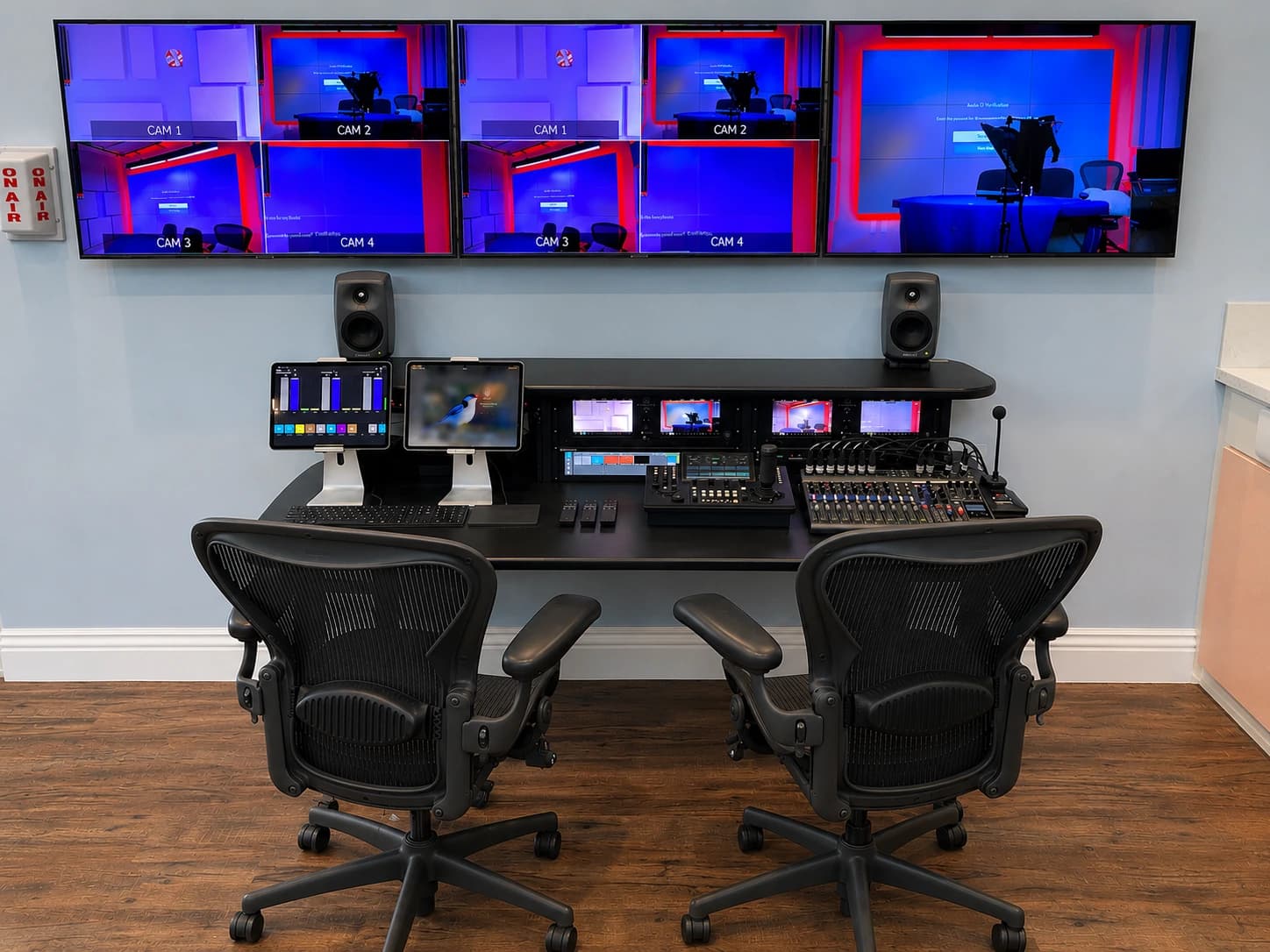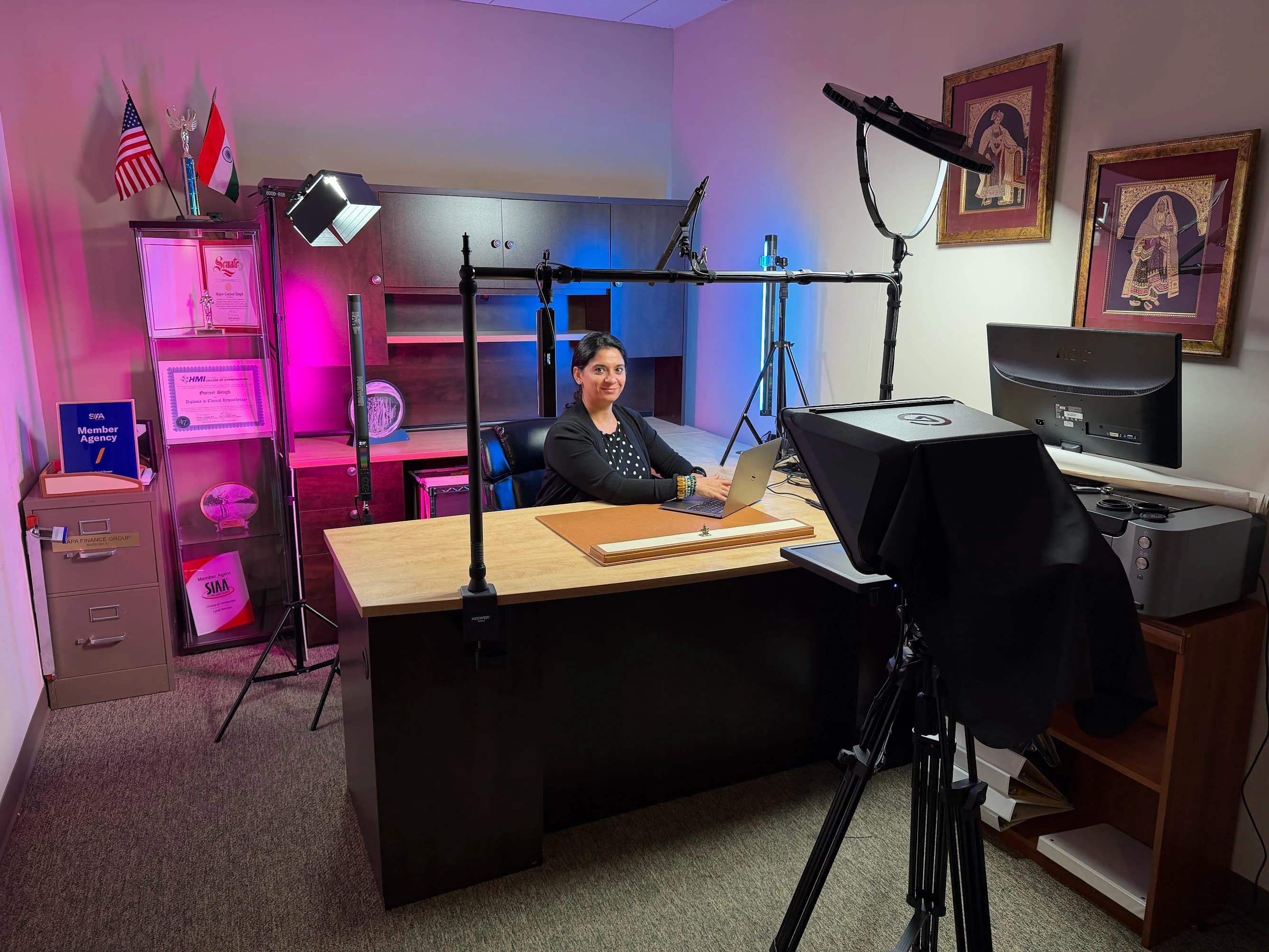

Acoustic treatment changes how sound behaves inside a room. Sound isolation addresses sound passing into or out of it. A room can have controlled reflections and still admit traffic, conversations or mechanical noise. Confusing those problems can lead to an attractive installation that does not solve the recording complaint.
Start by describing what you hear. “The voice has a long tail after each sentence” is different from “we can hear the office next door.” That distinction determines which questions to ask before choosing materials or microphones.
Listen for the source of the problem
Record a short passage of speech, followed by silence, from the intended presenter position. Repeat it with the normal ventilation and equipment running. Then note any nearby activity that changes the recording. Keep the microphone and recording settings consistent enough to make the comparison useful.
A ringing or smeared quality after speech can point toward room reflections. An identifiable sound from another space points toward transmission or an opening between spaces. A hum from equipment inside the room may require a different investigation again. These observations help organize a survey; they are not a substitute for acoustic measurements when the project needs them.
Do not judge only by clapping once in an empty room. Speech, microphone position, furniture and operating equipment all affect the practical result. The relevant test is whether the intended program can be recorded under its normal working conditions.
Treatment works on the room’s internal sound
Absorptive treatment can reduce reflected energy, while other acoustic elements may redirect or distribute reflections. The appropriate design depends on the room and the intended use. Covering visible wall areas with an arbitrary material does not establish a balanced result.
A spoken-word studio and a music monitoring room can have different priorities. Even within speech recording, the microphone position and number of participants affect what needs attention. Ask the designer to connect the treatment proposal to the observed problem and the recording setup.
Genelec’s room-acoustics guidance explains how surfaces and reflections affect listening conditions. It is useful background, but a generic illustration is not a specification for your building. The installation should respond to the actual room rather than imitate a photograph of another studio.
Isolation follows the building paths
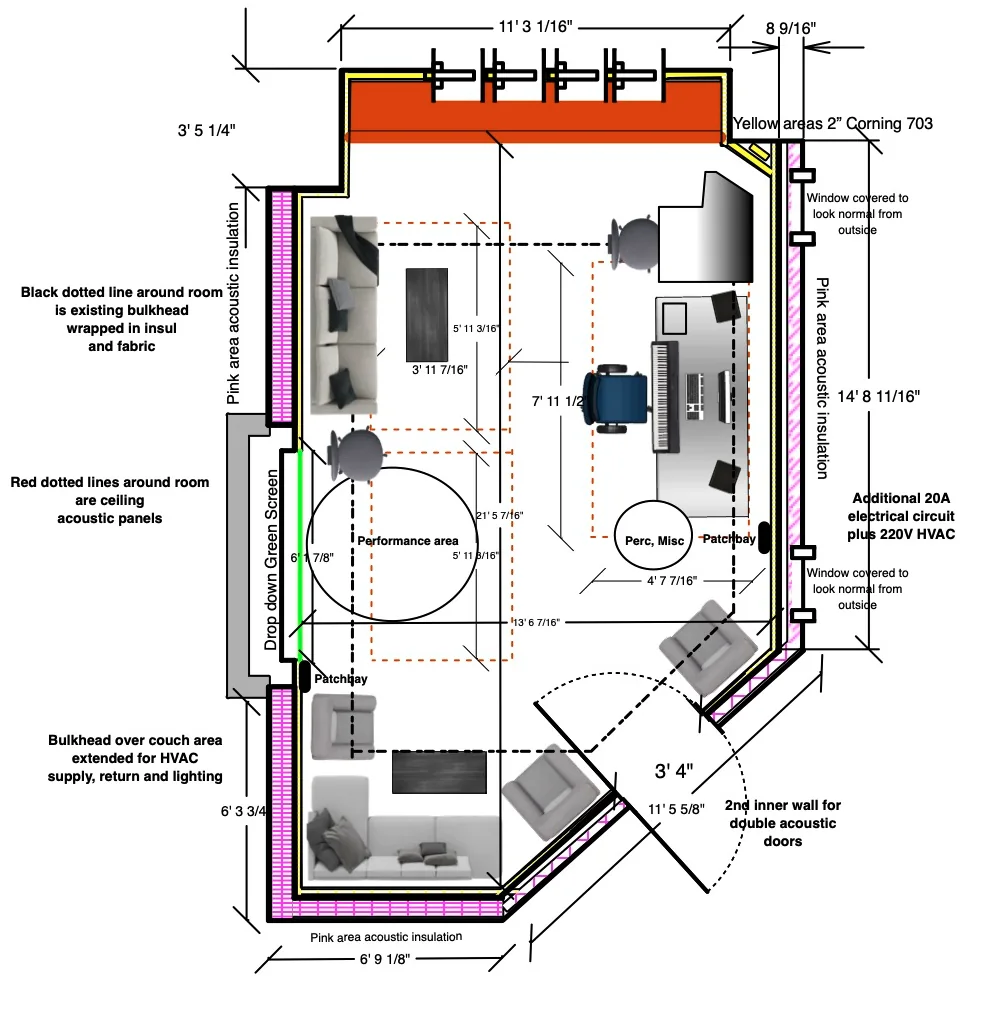
Sound can reach a recording space through more than its most visible wall. Doors, gaps, ceiling spaces, floors, ventilation paths and connected structures may matter. Treating one surface without understanding the other paths can leave the original complaint largely intact.
Isolation work often needs coordination with the people responsible for the building. A door, ventilation change or altered assembly can affect access, comfort and other requirements. Ask qualified specialists to assess the proposed work instead of improvising a sealed room around a recording need.
Describe the performance requirement in practical terms before requesting a technical target. Which source is disruptive, when does it occur, and what must be recorded at that time? A team recording occasional interviews has a different operational problem from a room that must remain usable throughout an active production day.
Microphones do not replace the room assessment
A microphone’s position and directional behavior can help manage what it captures, but a new microphone does not make the surrounding sound disappear. Compare practical placements with the actual speaker. A close position may improve the relationship between the voice and the room, yet it must remain comfortable and compatible with the camera view.
Listen to the recording without aggressive processing first. Software can be part of a workflow, but it should be tested on the real material. The question is whether the resulting voice remains usable, not whether a noise-reduction setting has an impressive name.
If moving the microphone helps, record that improvement alongside its constraints. Perhaps the presenter can use the position for a scripted message but not for a demonstration that requires movement. That information belongs in the design brief rather than being treated as a universal fix.
Match the response to the evidence
| Observation | Likely investigation | What would be premature |
|---|---|---|
| Speech remains audible as a tail in the room | Reflections, surfaces and microphone placement | Ordering isolation construction without a room assessment |
| Conversations enter from next door | Doors, partitions, ceiling paths and operating conditions | Assuming wall panels will block the conversation |
| Equipment fan dominates pauses | Device noise, location, ventilation and microphone relationship | Buying a camera or microphone solely by price |
| Noise occurs at predictable times | Source control, schedule and building conditions | Promising the room will be quiet at all hours |
| Voice changes as the presenter moves | Microphone coverage and actual speaking positions | Testing only a fixed seated pose |
Several responses may be needed together. A quieter equipment location can address one source, treatment can improve the room and building work can address transmission. The value of separating the problems is that each proposed intervention has a clear purpose and a way to be tested.
Use project photographs carefully
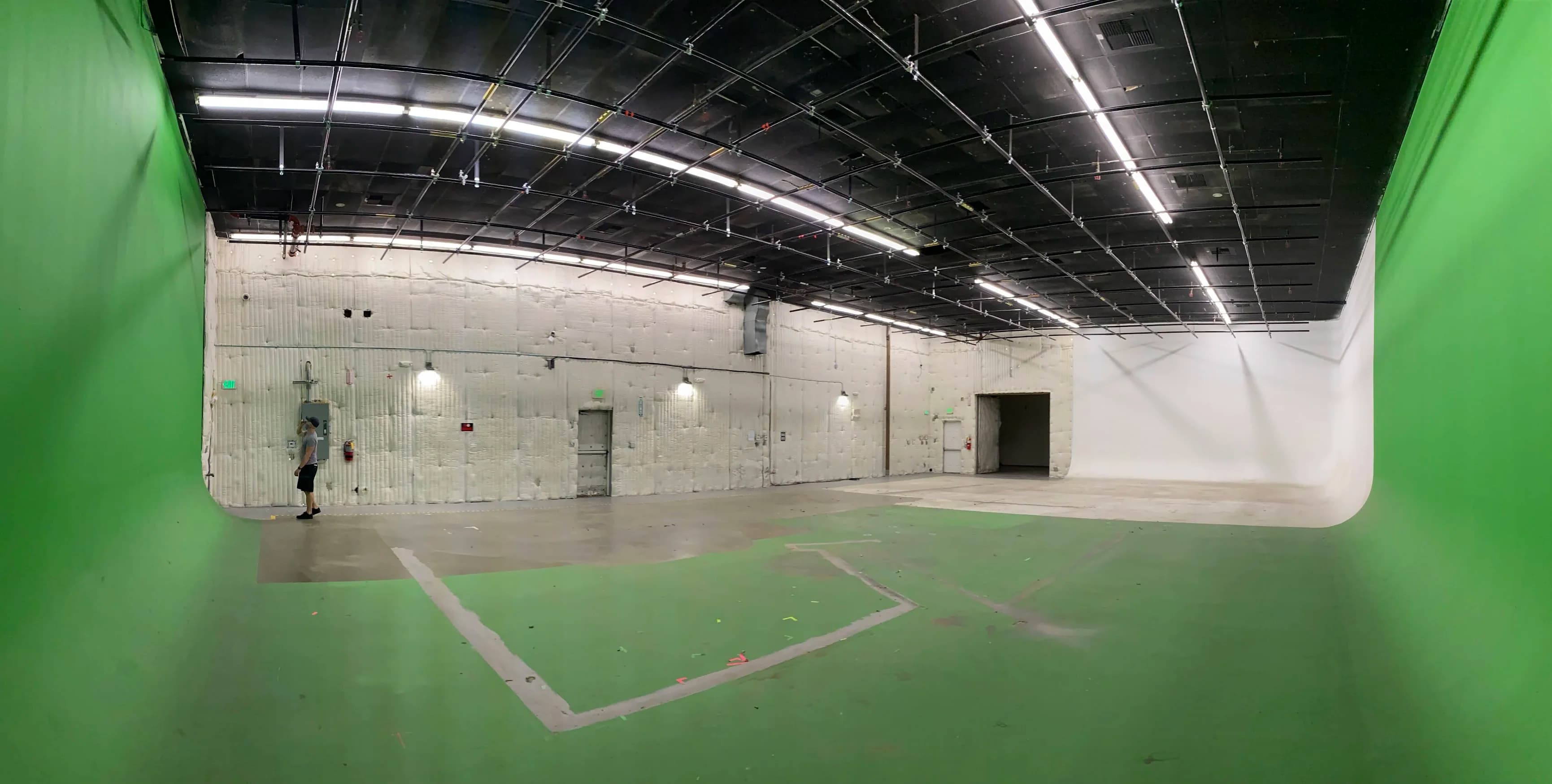
JAZ’s Burbank production-stage record includes repairs to acoustic treatment and ceiling conditions alongside refinished capture areas and infrastructure work. Those are documented scope items. The photograph of the stage helps explain the working environment, but it cannot prove a measured isolation rating.
The same caution applies when comparing proposals. A room lined with visible panels may look acoustically finished while a hidden transmission path remains. Ask for the survey findings, the intended result and the acceptance method. Appearance is useful for discussing integration into the space, not for verifying sound performance.
Prepare a useful audio brief
Provide a room plan, photographs, recordings from the intended microphone position and a list of noise sources with their timing. Explain whether the room is used for meetings, solo recording, interviews or music. Identify restrictions on construction and changes to ventilation or furniture.
Ask the project team to distinguish treatment, isolation, source control and operating changes in its recommendations. Each should name the problem it addresses and the evidence needed to judge the result. JAZ can discuss those needs within studio design and coordinate the appropriate technical review. Send your room and recording examples before committing to materials chosen only from their appearance.
Jesse Kaplan

Jesse Kaplan is the third generation of JAZ Entertainment. His work spans permanent studios, professional AV systems and live technical production.
About Jesse and JAZ