
An in-house studio makes sense when an organization has a recurring production need, a realistic operating team and a suitable place to keep the system ready. Equipment ownership alone does not create a useful studio. The decision should include who produces the content, how it is approved and what happens between recording sessions.
A permanent room is one option. An improved meeting space, a portable setup, an external studio or a combination may fit the work better. Compare them against a real production calendar rather than an imagined future volume.
Look at the work already waiting to happen
Gather recent and planned projects. Include leadership messages, training, product demonstrations, interviews, webinars and live appearances. Identify which formats repeat and which depend on unusual locations, large crews or specialist sets.
The strongest case for an internal studio often comes from repeatable work that is difficult to schedule under the current arrangement. That does not establish a financial return by itself. It provides a workload to evaluate: the people involved, preparation required, current bottlenecks and likely use of a permanent space.
Ask why existing projects are delayed. If scripts are not approved or nobody has time to edit, a studio may not remove the constraint. If finding a quiet, camera-ready room repeatedly prevents recording, a dedicated environment may address a more direct problem. Separate production capacity from content-management problems.
Account for the work after installation
Someone has to prepare the room, monitor recording, manage files and maintain the system. Those responsibilities continue even when the equipment is easy to start. A simple control interface can reduce repetitive actions, but it does not write the script, check the guest connection or approve a finished video.
Name the studio owner and the people available during sessions. Include cover for absence and a support route for failures. If the proposed workflow assumes help from IT, communications or facilities, confirm that allocation instead of treating those departments as spare production capacity.
Consider whether the room serves several teams. Shared use can make a studio more valuable, but it introduces booking, reset and priority questions. A team arriving for a webinar should not discover that another group changed the furniture and left no record of the camera or audio configuration.
Inspect the room before comparing packages
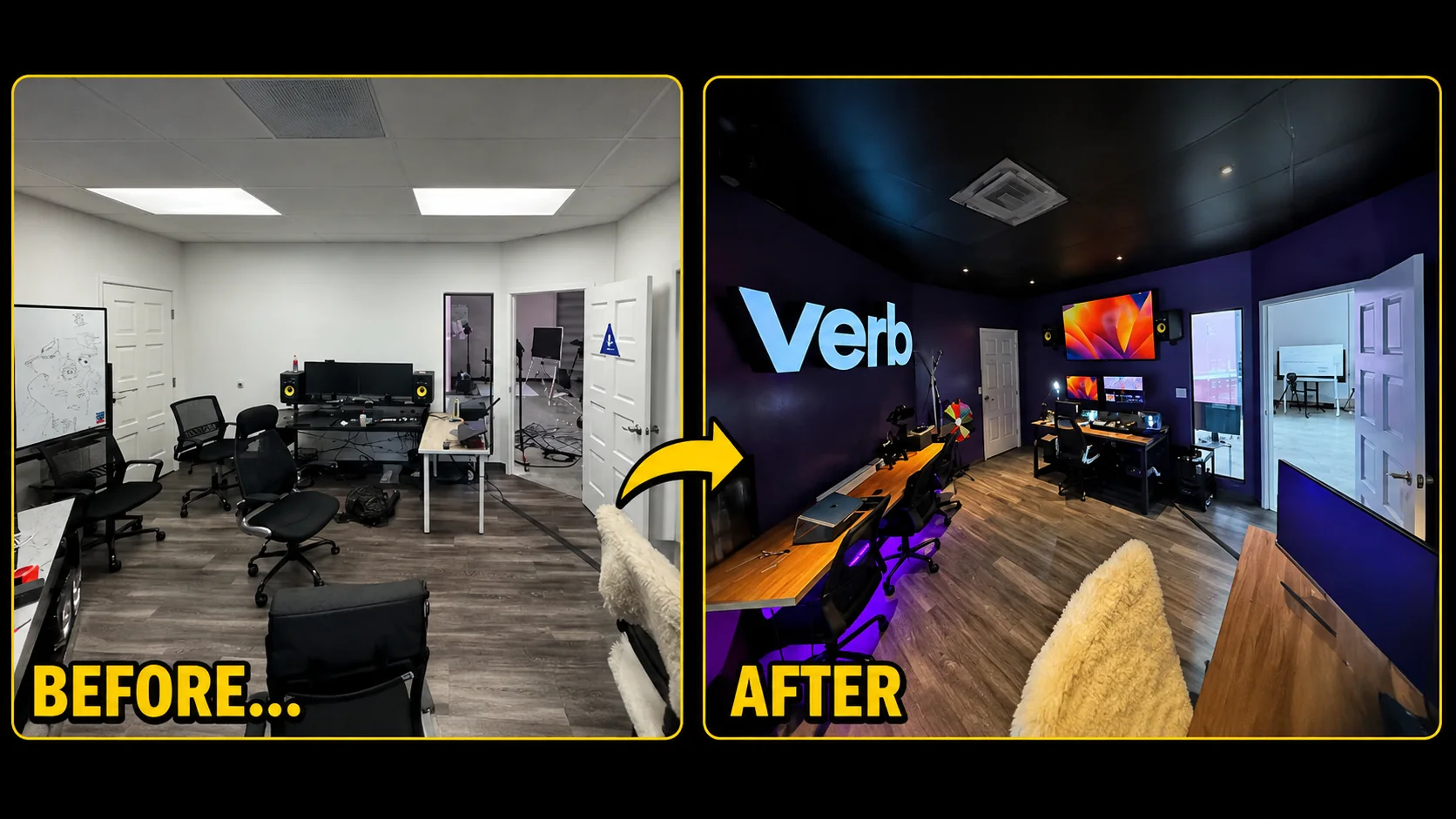
A room can be available without being suitable. Ceiling height, usable depth, noise, ventilation, power, network access and installation restrictions can shape the entire project. Assess those conditions before allowing an equipment proposal to imply that the space has been approved.
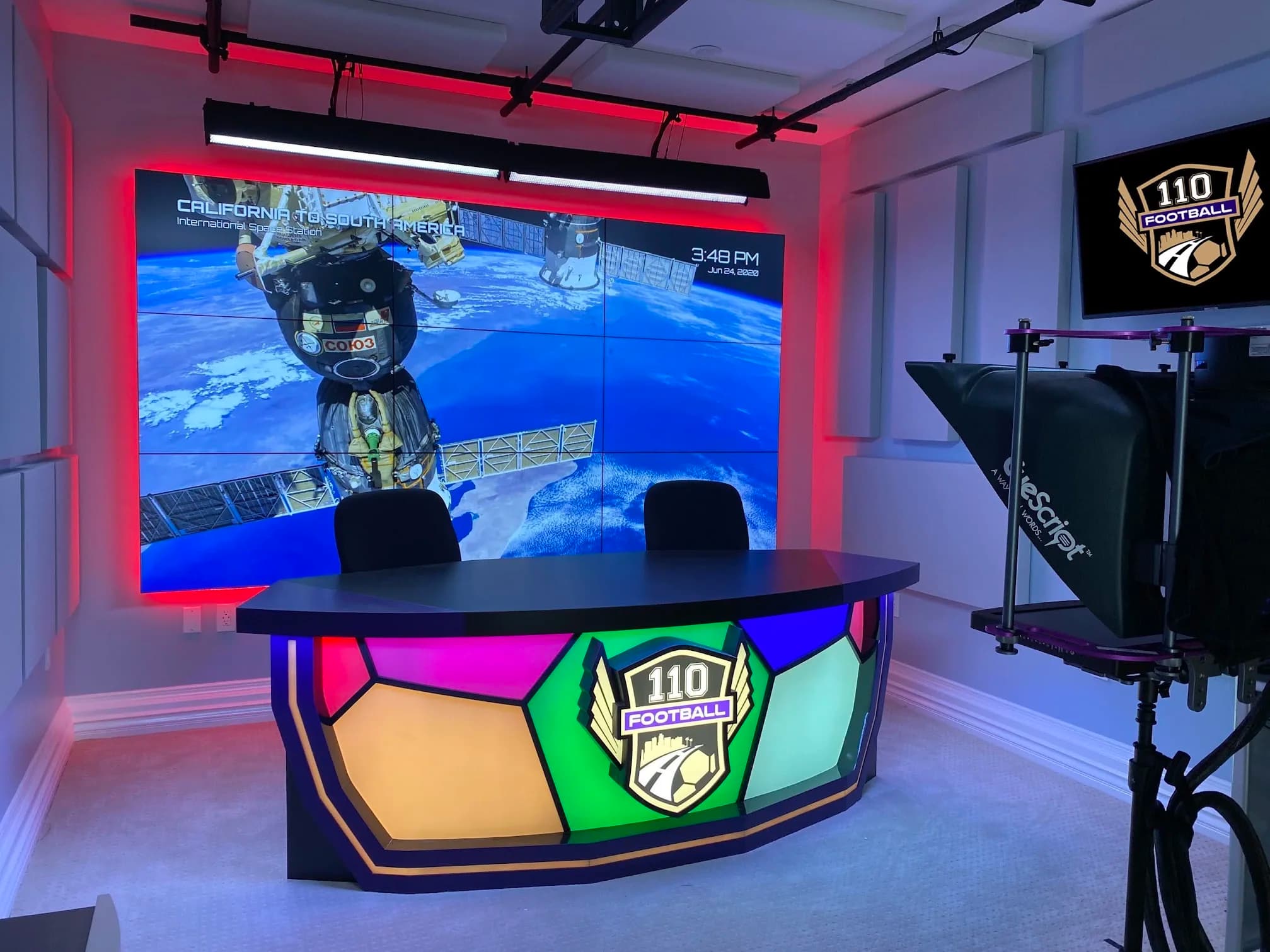
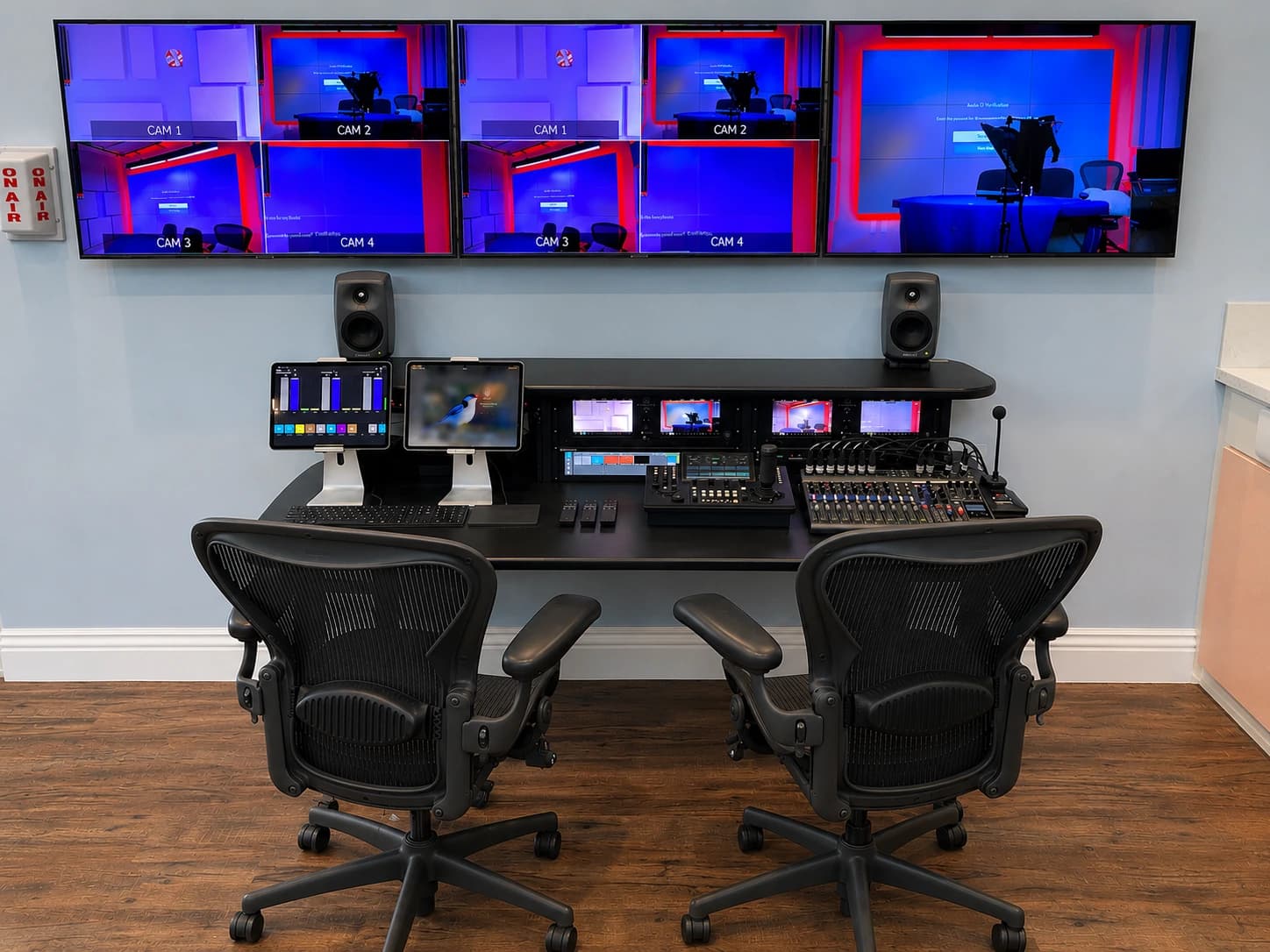
JAZ’s 110 Football studio is a useful example of scope extending beyond cameras. Its detailed record includes room expansion, a separate engineering position, lighting infrastructure, cooling and integrated controls. Those are specific project facts, not a suggested package for every corporate room.
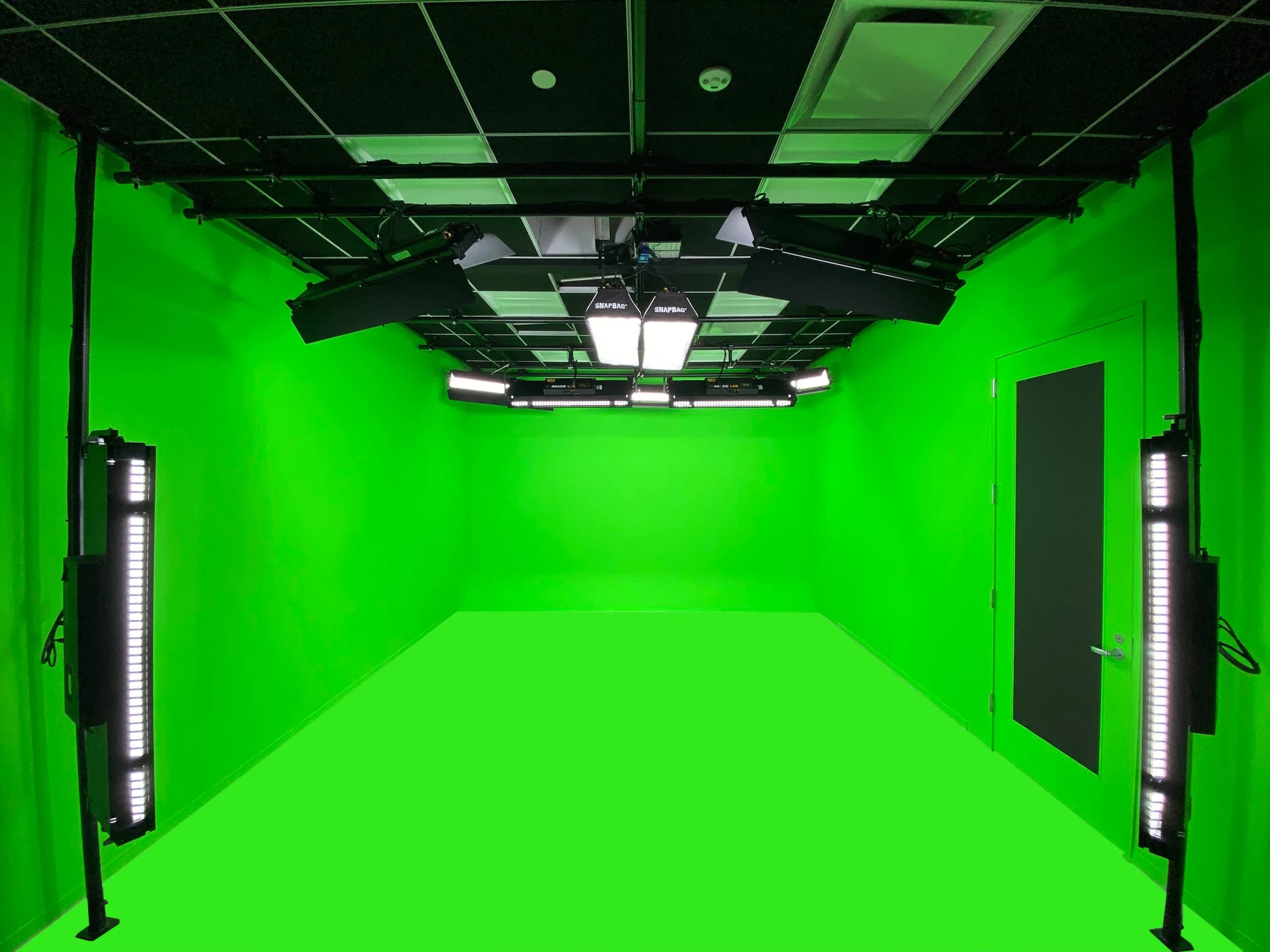
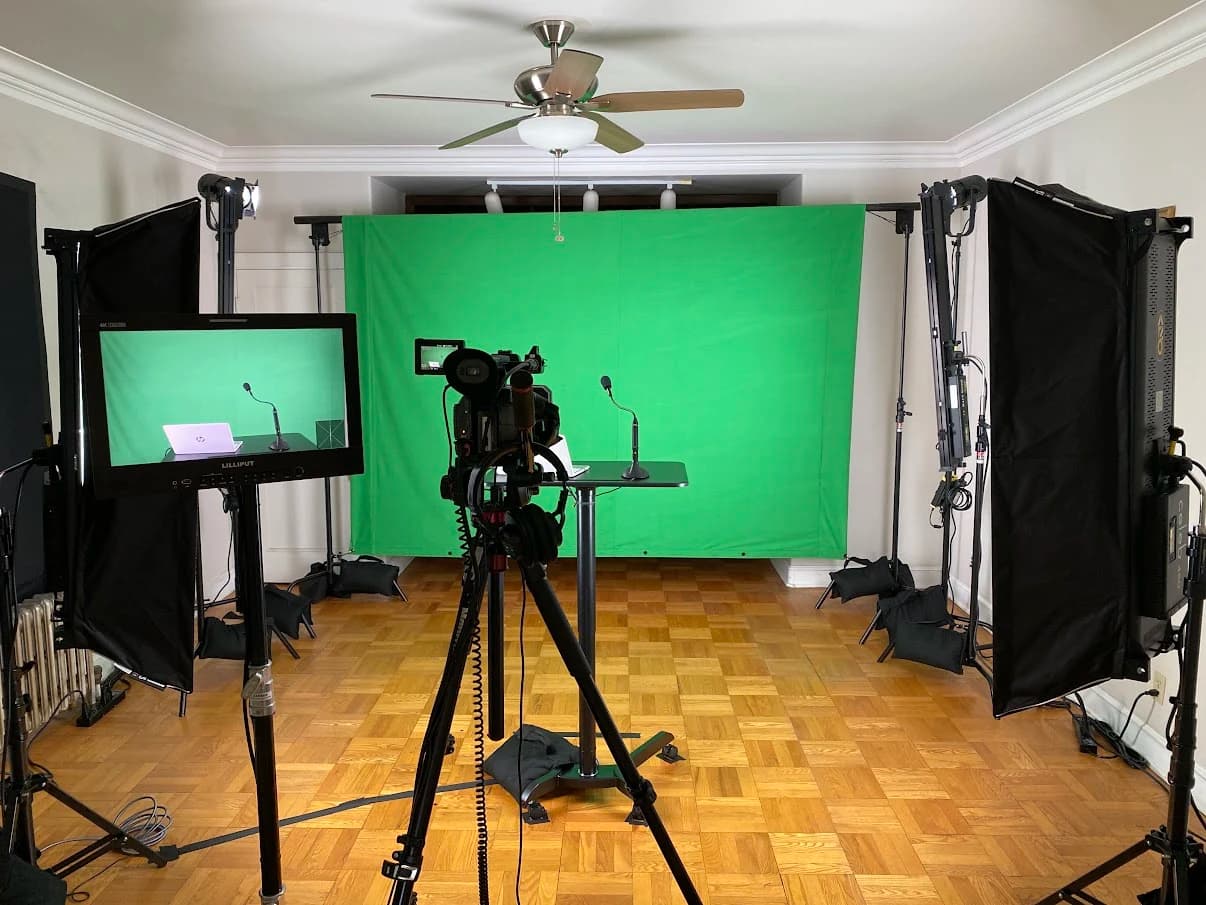
A smaller project may need much less. The St. John’s Seminary studio is documented as a portable arrangement using a green screen, camera, lighting and monitoring. The relevant distinction is between the required operating environment and the amount of permanent construction, not between a “professional” and “unprofessional” room.
Compare options using the same program
Choose one representative production and describe how each option handles it. Include preparation, recording, support, editing, delivery and reset. This makes the tradeoffs visible without relying on speculative savings or universal utilization targets.
| Option | Where it can fit | What remains to be solved |
|---|---|---|
| Improve an existing room | Frequent single-presenter communication | Shared-room reset, privacy and limited formats |
| Portable internal setup | Several locations or occasional recording | Storage, setup responsibility and consistency |
| Dedicated internal studio | Recurring formats with an assigned operating team | Room readiness, maintenance, scheduling and content workflow |
| External production space | Intermittent or specialized productions | Travel to the space, booking and recurring coordination |
| Combined approach | Routine internal work plus larger occasional projects | Clear criteria for which work goes where |
An internal room and external production support can complement each other. A team might handle routine updates internally and use additional production resources for a major event. The useful brief defines that boundary so the studio is not overbuilt for rare needs or expected to replace every specialist capability.
Evaluate costs you can actually support
Ask for scoped costs tied to the room and deliverables. Consider design, infrastructure, integration, training, maintenance, replacement and the time of the people using the system. Separate one-time setup from recurring operation so the decision is not reduced to the camera and lighting purchase.
Use your own production history to compare alternatives. Do not import a generic break-even number from another business. Program complexity, internal staffing, room condition and the required outputs can change the calculation substantially.
Record uncertainties explicitly. A building survey may be needed before construction is priced. IT may need to test a streaming or remote-contribution method. An unknown is a reason to investigate, not to add an unsupported allowance and present the result as a firm plan.
Use a pilot to expose the real constraints
A pilot should travel through the whole workflow. Prepare a short piece, record it using a representative arrangement, deliver it to the editor and obtain the normal approval. Note where the process slows or requires unplanned assistance.
Review the result with the people who would use and support the finished studio. The presenter can judge comfort. Communications can assess whether the output is usable. IT can identify integration constraints. Facilities can explain what the room permits. Their combined observations make a stronger design brief than an equipment demonstration alone.
The decision to proceed should name the supported formats, room, operating owner and acceptance criteria. If those remain unresolved, keep the project in planning rather than treating procurement as progress. JAZ’s broadcast studio service can help turn those decisions into a coordinated scope. Send the current workload and room information to begin that assessment.
Jesse Kaplan

Jesse Kaplan is the third generation of JAZ Entertainment. His work spans permanent studios, professional AV systems and live technical production.
About Jesse and JAZ