Three generations in Hollywood · 60+ countries
I build broadcast studios into offices, garages and warehouses — so the room stops working against the person in it. Samsung, Cisco, LAFC, Parker University.
Taken from where the camera sits. I’ll tell you what’s wrong with the room and roughly what it costs to fix. Takes me ten minutes and there’s no obligation.
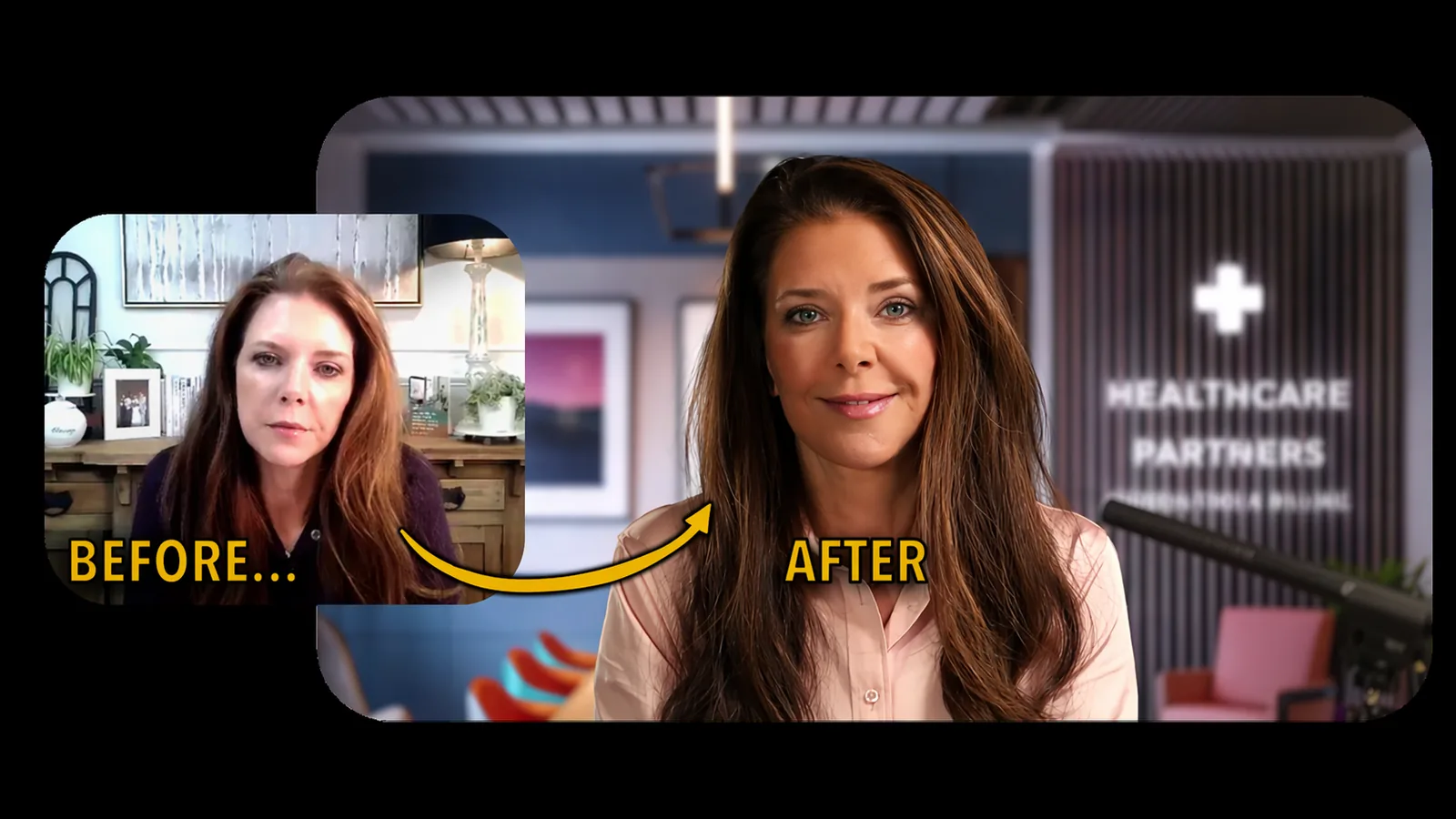
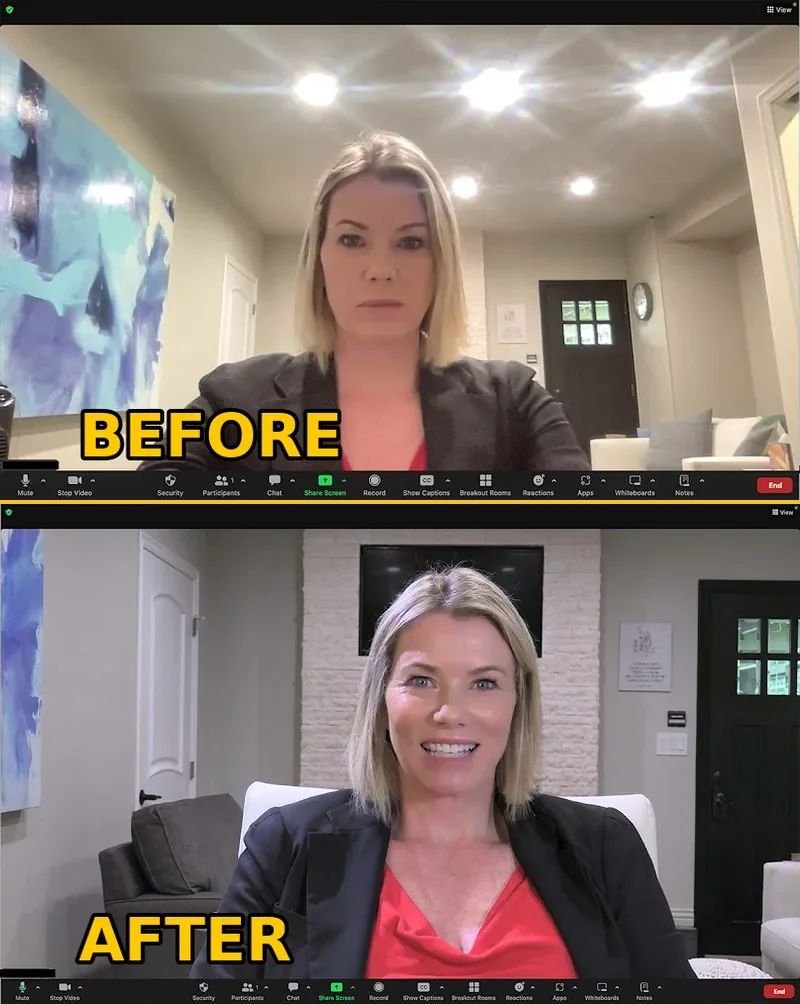
Same room. Same day. Nothing built — the ceiling cans went off, the key went off-axis, and she sat down.
The recognition
The camera sits below your eye line, so everyone is looking up at you. The recessed lights overhead carve shadows under your eyes and flatten everything else. There’s a window behind you, so the camera exposes for the window and gives up on your face.
The floor is hard and the walls are bare, so your voice bounces around the room a few times before it reaches the microphone, and it arrives thin. None of that is a competence problem. It’s a physics problem, and you’ve been blaming yourself for it.
The good news is that physics is fixable, and it’s usually cheaper than people expect — because the expensive part is knowing what to change, not what to buy.
What this actually is
A studio is three systems that have to agree with each other. Most setups fail because someone solved one of them and ignored the other two.
Surfaces, acoustics, sightlines, what’s behind you and what it says about you. This is the part almost nobody addresses, and it’s the part that makes the difference between “on a laptop” and “on a broadcast.”
Key placement, fill, color temperature, and fixtures that hold up on camera instead of just making the room bright. Lighting is the single largest difference between the before and after images below.
Camera, lens, audio chain, switching, and the connections behind it. Built so it works at 9am on a Tuesday with nobody technical in the room. If it needs a specialist to turn on, it will not get used.
Proof · Tier A
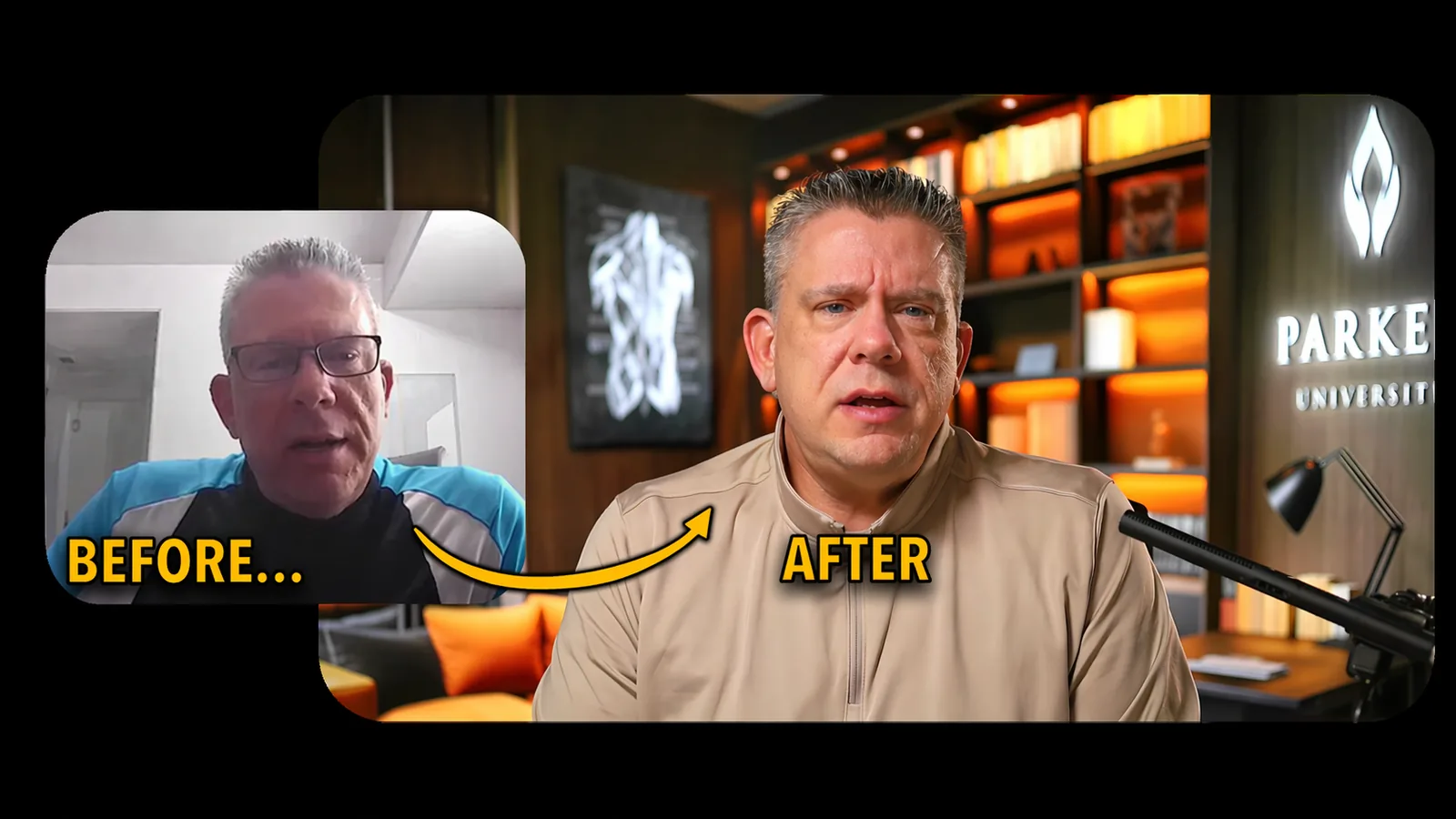
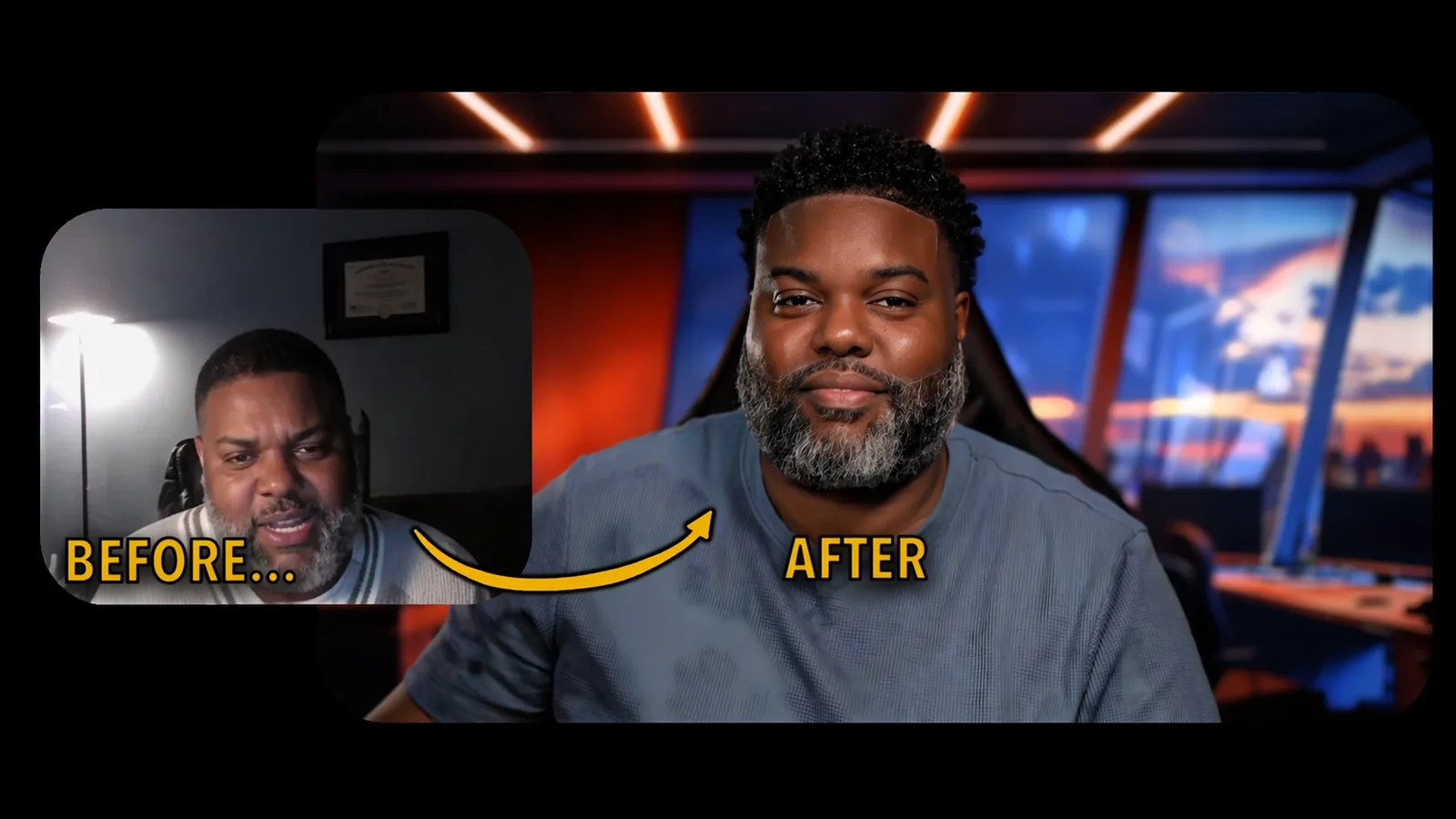
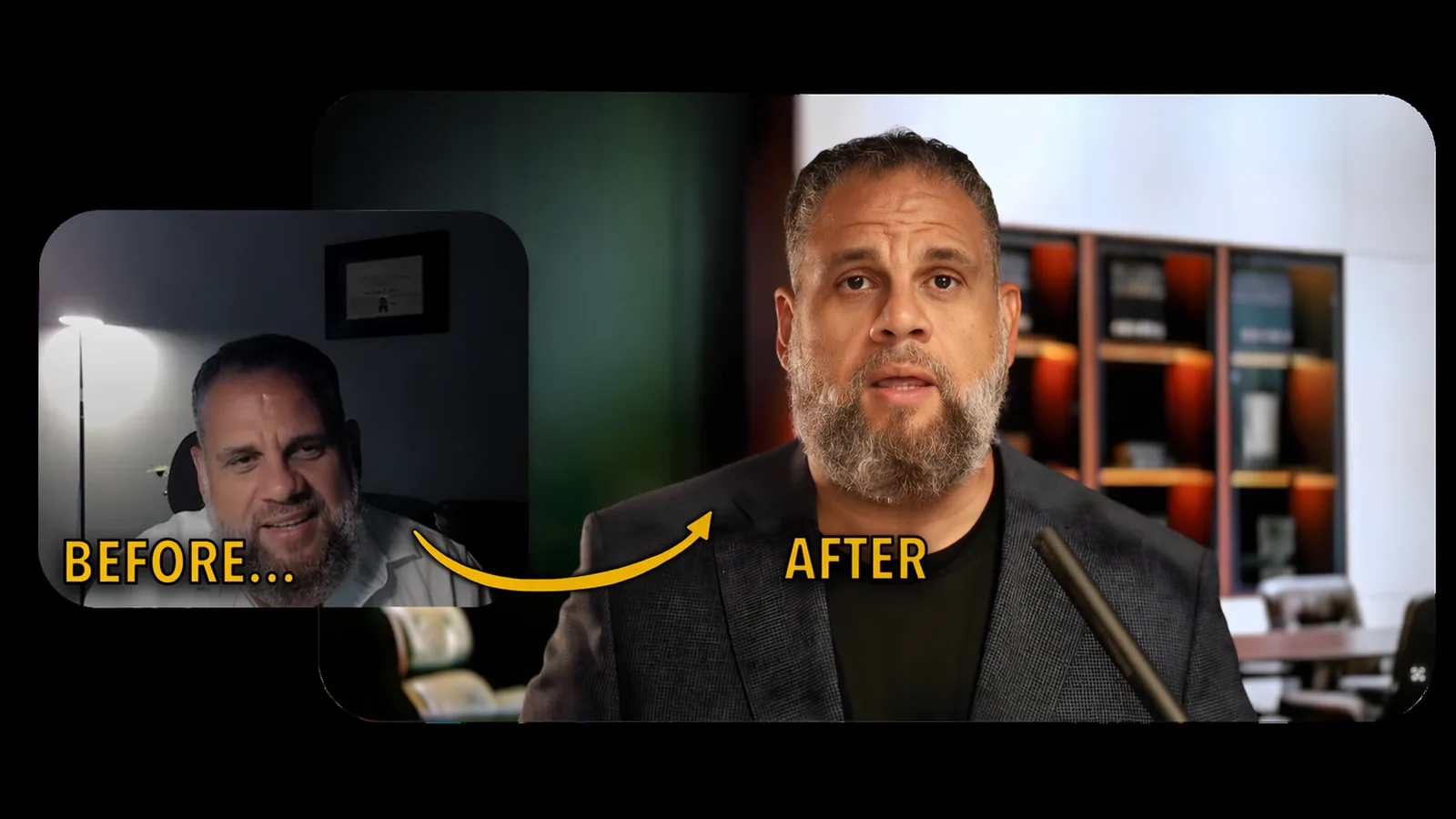
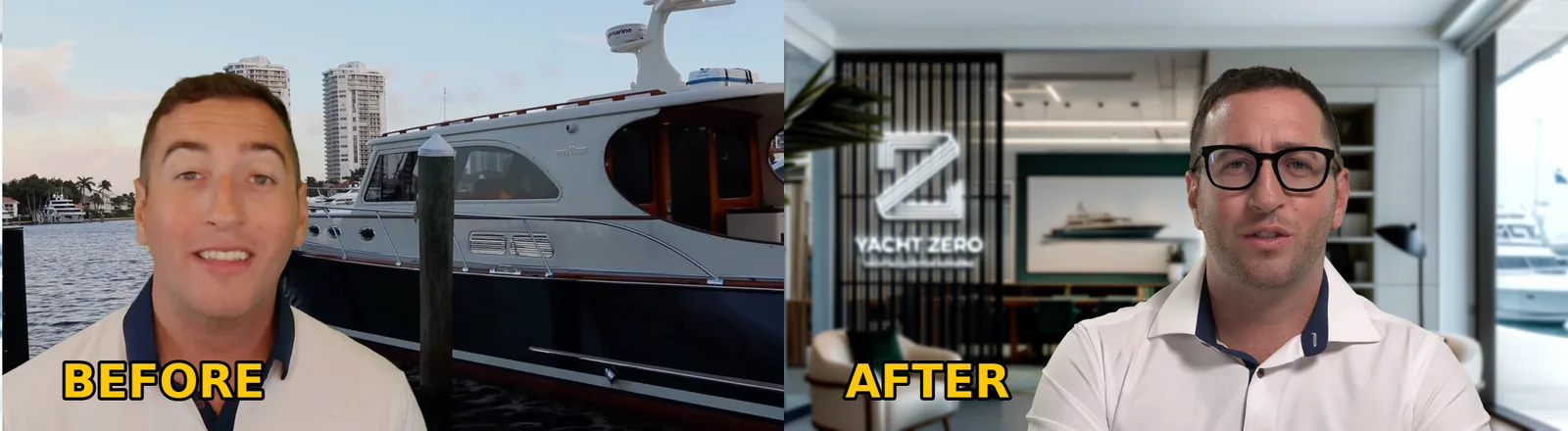
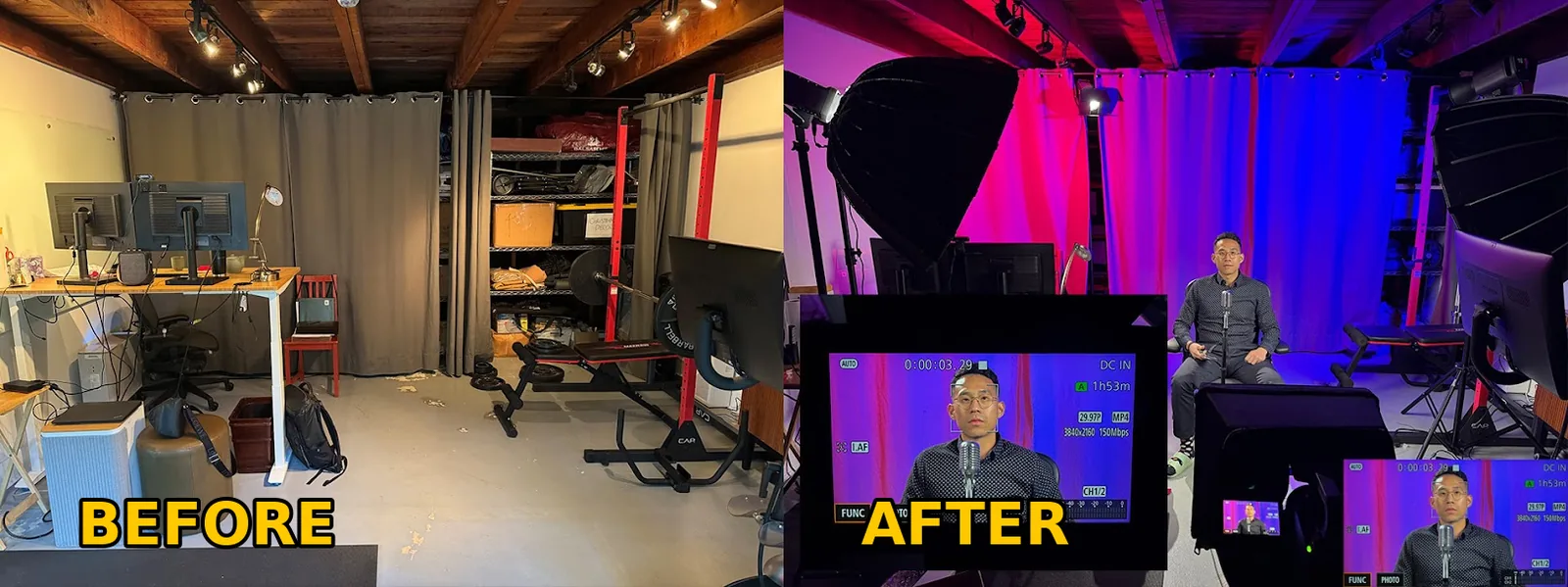
No renovation. No moving house. These are the rooms our clients already had, relit, reframed and dressed. Look at what changes when nothing structural does.
The company mark now sits behind her shoulder on every call, every webinar and every recorded clip — without a single graphic overlay or virtual background.
Built to survive being on camera daily. Practicals on one switch, key and fill on a second — the whole rig comes up in about four seconds.
Color contrast is doing the work here. Cool background, warm subject — the oldest trick in feature lighting, and the reason he now reads as talent rather than a guest.
The brief was “look like the person who owns the firm.” Same square footage, entirely different read.
The point of a built set isn’t one good shot. It’s the two hundredth one looking identical to the first, at 4pm in January.
Proof · Tier B
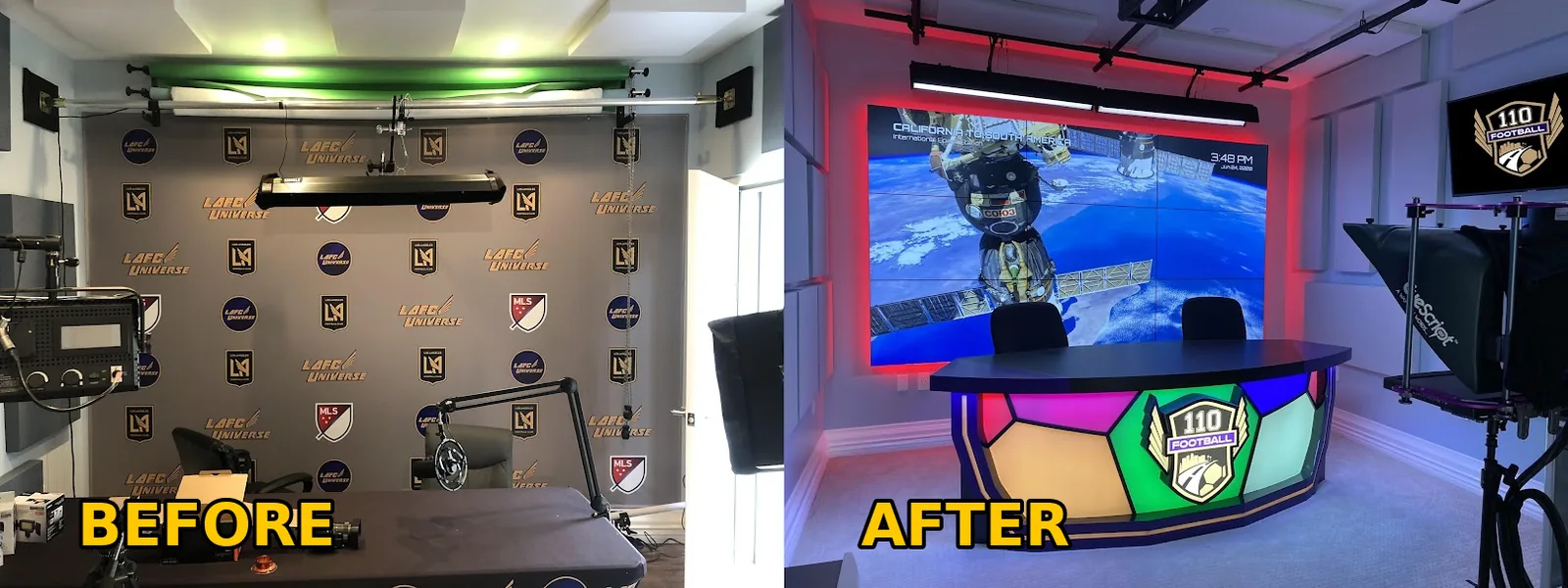
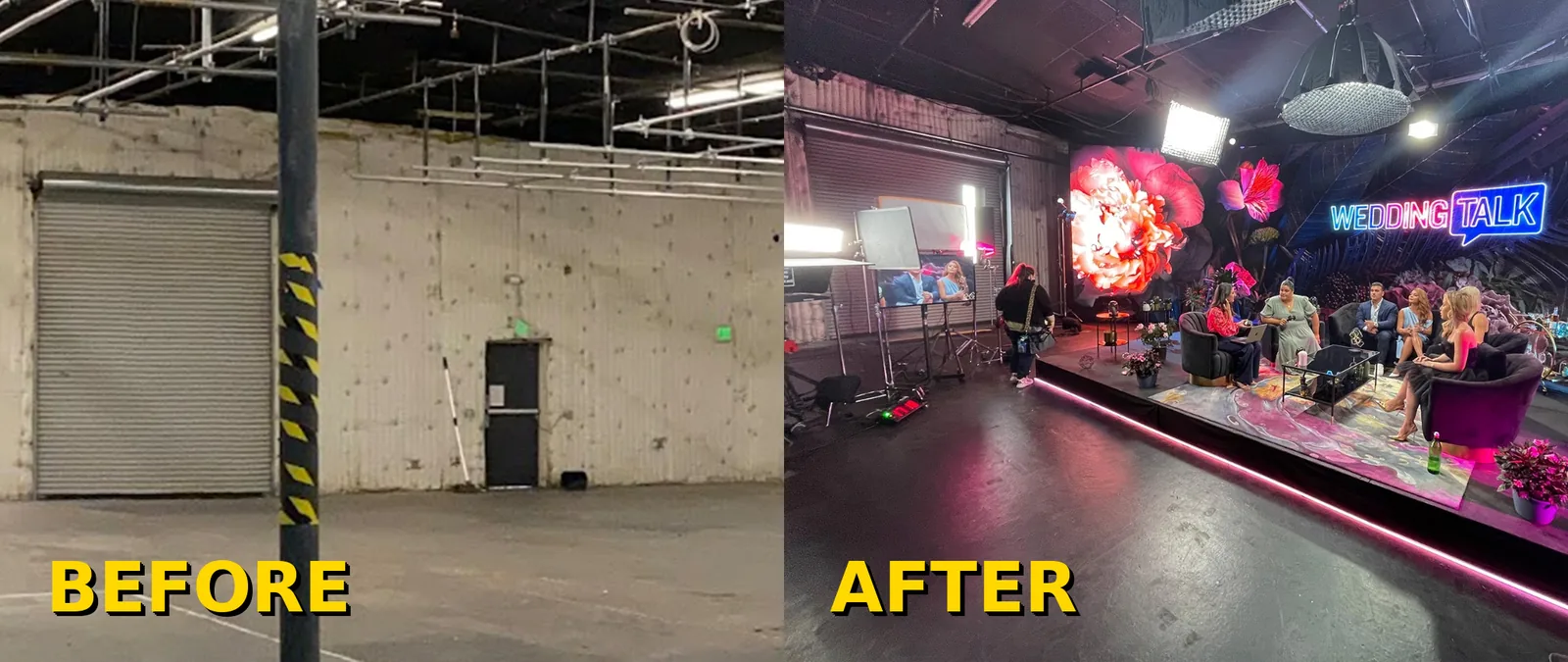
Some briefs need steel, grid and drywall. We do that part too — the same crews that build motion-capture volumes and broadcast studios for Cisco and Samsung.
The gym stayed. We built around it, and the whole rig strikes back to a wall in under twenty minutes.
Sports desk built to hold its own against a network cutaway. The desk graphic is edge-lit acrylic, fabricated in-house.
Empty warehouse to a shooting set. This is the far end of the same skill that fixes a bad Zoom — scale changes, the physics don’t.
What you actually get
Plenty of people will send you a gear recommendation. We design the room, source it, build it, light it, and stay on the hook once you’re using it.
Key, fill, back and practicals, specified for your ceiling height and your face — not a generic three-point diagram.
Sensor and focal length chosen for how far you actually sit from the wall. This is where most DIY setups go wrong.
Boom, lav or shotgun, plus treatment for the room’s real acoustic problems. Bad audio reads as low budget faster than bad picture.
Millwork, shelving, signage, color and dressing — designed so your mark is in frame without looking like an ad.
You are not going to run a lighting console before a 9am call. Everything comes up on one switch, at one setting.
Firmware, replacements, and a human who answers when something stops working the morning of a keynote.
Why us
Jaz Entertainment was founded by the Kaplan family — William Kaplan Sr., William B. Kaplan and Jesse Kaplan. IATSE Local 695. Product ambassador for Kino Flo Lighting. Feature credits including Avatar, Super 8, Cowboys & Aliens and The Polar Express.
That matters here for one reason: the people lighting your office learned to do it on feature sets, where an unflattering shadow costs real money. We’ve worked in over sixty countries. Yours is not a logistical problem.
In their words
I hired Jaz Entertainment to upgrade my home video conferencing setup with theatrical equipment, and the results were fantastic. They installed professional lighting, added high-quality sound gear, a theatrical video camera and set up customizable backdrops, giving my video calls a polished, studio-like feel.
Dr. Jay KhorsandiHealthcare Executive, Byte
I recently worked with Jaz Entertainment on a studio design project, and their expertise blew me away. They took the time to really understand my needs, and their team’s knowledge of lighting, sound, and video production was top-notch.
Julian MelansonBusiness Consultant
Jesse and his team were phenomenal. I had a custom recording studio built in my house and it came out better than I could have hoped. Great customer service, easy to work with, and a vast knowledge of the industry.
Mitsuhiro HabukiCEO, Kinoko Collective
What sets Jaz Entertainment apart is their innovative approach to creating flexible, movable set structures. Their designs allow us to quickly and easily adjust the studio setup for different needs, whether it’s a podcast recording one day or a live stream the next.
Brandon KenningtonCEO, Bluekube Brands
Jesse ran the project and was an excellent collaborator, paying close attention to every detail of the space and providing insightful recommendations for the most optimal lighting setup. I highly recommend Jesse and Jaz Entertainment as the go-to experts.
Link HuangHead of Design, Samsung / NEON
Jaz Entertainment’s team is basically a bunch of hyper-brilliant MacGyvers. Anything we wanted, they figured it out and delivered on time and on budget. They will be our first call next project, done deal.
Ryan KaltmanMarketer
How it runs
One photo of your space, taken from where the camera sits. That angle matters — it’s the only view that shows me what the camera sees.
I’ll tell you what’s working against you, in what order I’d fix it, and roughly what each fix costs. Some of it you can do yourself for nothing. I’ll say so when that’s the case.
If the answer is “move your desk and buy one light,” that’s the answer, and you’ve lost nothing. If it’s a real build, you’ll already know exactly what you’re buying and why.
Before you send it
The teardown is free. Builds vary more than any honest range would suggest — a corrected desk, one fixture and some acoustic treatment is a few thousand dollars; a dedicated broadcast room with a cyclorama is a construction project. The photo is how we find out which conversation we’re having.
No. A corner of an office works. So does a garage. The three variables are ceiling height, what’s behind you, and how much control you have over the light — and only one of those is expensive to change.
Then we build it non-invasively. We’ve done a full studio inside a historically protected property where nothing permanent was allowed, and it reads as built-in.
Good — bring them. A meaningful share of teardowns end with “you own the right gear and it’s in the wrong place.” Rearranging what you have is the cheapest possible outcome and I’ll tell you when it’s the right one.
Yes. We’ve worked in over sixty countries — San Jose and Beijing among them. North America is where we’re most often on site ourselves; elsewhere we design, specify and project-manage with a local install crew. Travel is a line item, not an obstacle.
Most single-room builds are measured in days on site, not weeks. The lead time is equipment, not labor.
That’s a completely acceptable outcome. It costs me ten minutes and it’s how people find out whether I know what I’m talking about.
Step 01
One photo, taken from where the camera sits. No call to book, no application, no form to fill in.
Attach a photo of your space to an email and hit send. That’s it — a real person reads it and replies with the teardown.
Opens your email app with the address and subject filled in — just attach the photo and send. No drip sequence, no pitch deck.
Already know you want a build? Call +1 (818) 321-2019 or email Jesse directly to book a design call instead.